








Big & Tall Lightweight Jackets: A Buying Guide
A good Big & Tall lightweight jacket trades bulk for room: longer body, roomier shoulder, and sleeve room to move, without the insulation of a winter coat.
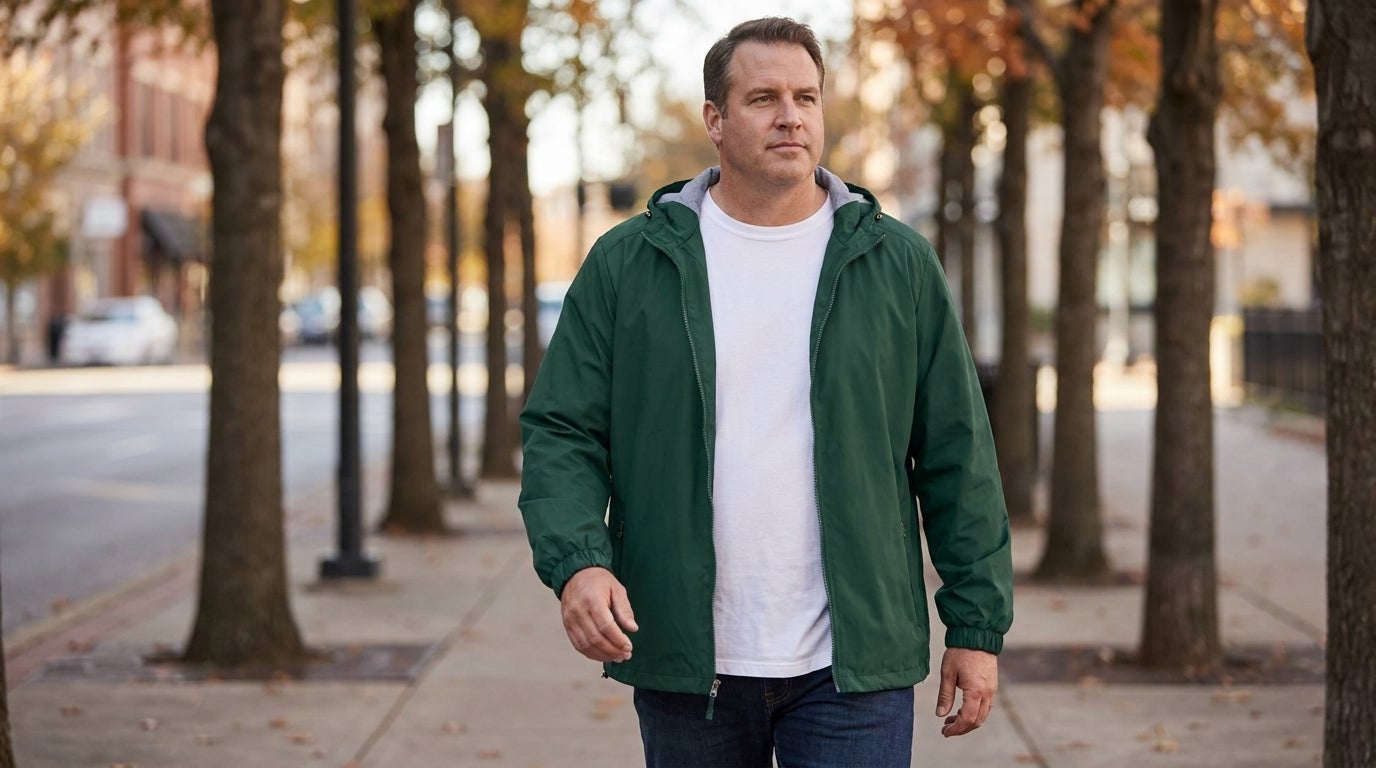
What makes a lightweight jacket work for Big & Tall guys?
A lightweight jacket built for Big & Tall proportions has a longer body and a roomier, articulated shoulder and sleeve — enough room to reach, drive, and move without the bulk of a full winter coat. It's the layer for 45–65°F days: wind resistance and light coverage, not heavy insulation.
Before you buy, check for:
- Fabric weight: a mid-to-light woven shell or a thin quilted lining, not a heavy parka fill.
- Body length: long enough to cover the seat and stay put when you reach or sit.
- Sleeve articulation: a gusseted sleeve that doesn't ride up the arm.
- Closures: a full zip with a storm flap or snap placket for wind without extra bulk.
KingSize's lightweight jackets built for Big & Tall proportions are built to these larger men's specs, and sold in sizes up to 10XL.
How should length and sleeve fit?
The hem should sit low enough to cover when you bend or sit, and the sleeve should be cut with room through the bicep and a slight bend at the elbow so raising an arm doesn't pull the whole jacket up. A jacket that's just a bigger version of a standard cut will ride up in both places.
- Shoulders sit at the seam — not sliding down the arm, not pulling across the back.
- Sleeve length covers the wrist with the arm extended.
- Body length clears the belt line by a few inches when seated.
Lightweight jacket vs. midweight jacket vs. parka
The right layer depends on the temperature and how long you're outside, not the calendar month.
If you're layering a hoodie or flannel underneath most days, a lightweight jacket built with extra shoulder and sleeve room handles it without feeling tight.
| Jacket type | Best for | Insulation |
|---|---|---|
| Lightweight Jacket | 45–65°F, wind, light rain, brief cold snaps | None to minimal |
| Midweight Jacket | 30–50°F, longer time outdoors | Light-to-moderate fill or fleece lining |
| Parka | Below 30°F, extended exposure | Heavy insulation, often with a hood |
Frequently asked questions
Can I layer a sweatshirt under a lightweight jacket?
Yes, if the jacket is cut with a roomier shoulder and sleeve to begin with. A jacket sized for a bare torso will feel tight the moment you add a layer underneath.
What temperature range is a lightweight jacket good for?
Roughly 45–65°F, or cooler days with wind and light rain rather than sustained cold. Below that range, a midweight jacket or parka holds heat better.
Do lightweight jackets need to be waterproof?
Water-resistant is usually enough for a quick shower; fully waterproof matters more if you're outdoors for hours in steady rain.