








Why the Same Size Fits Differently by KingSize Style
Garments are engineered per style, not scaled from one pattern, so sizes vary slightly between them — check each product's measurements for the best fit.
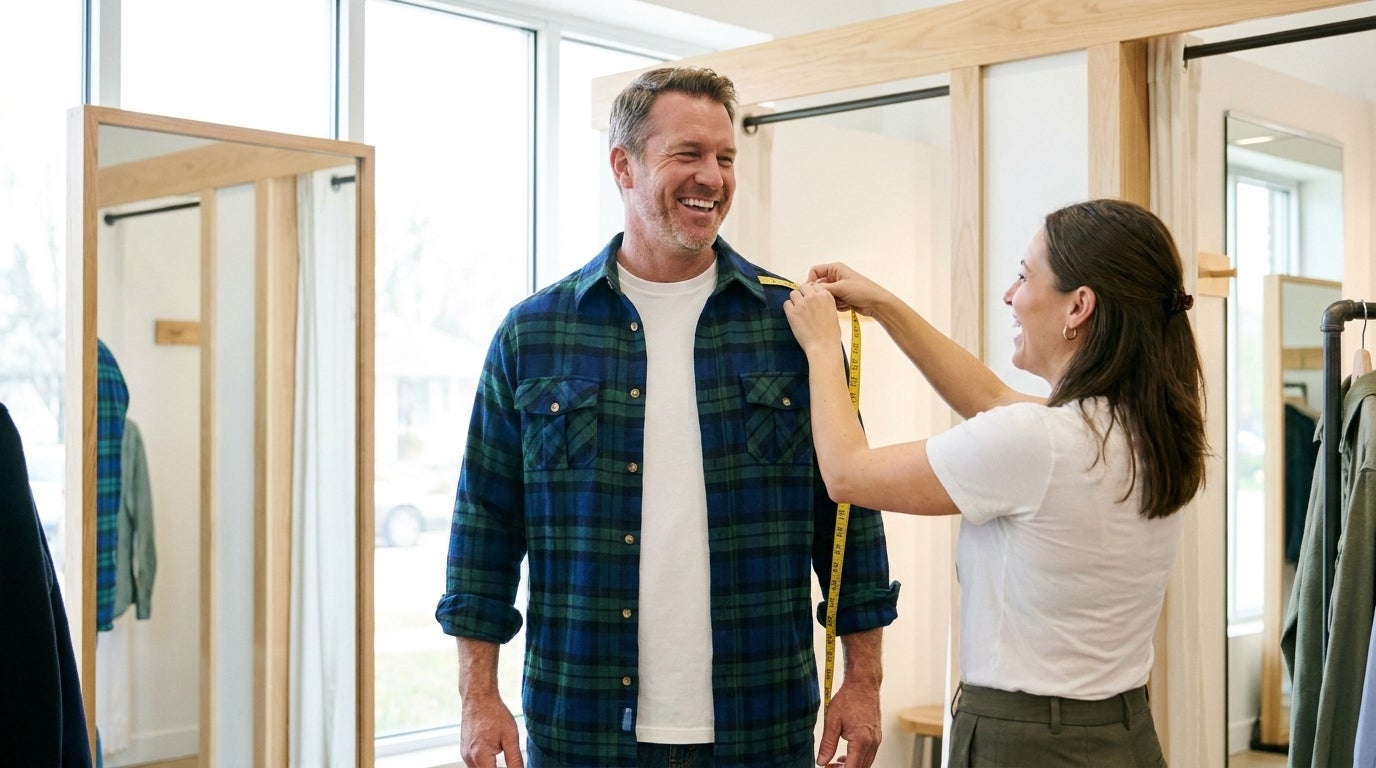
KingSize builds each style on its own pattern block, engineered for what that specific garment needs to do on a Big & Tall men's body — a 18 33/34 dress shirt and a 3XLT tee aren't cut from the same block, so the same labeled size can measure a little differently between them. That's normal, not a defect, and it's why checking a garment's actual measurements on our product page's size chart matters more than memorizing a size label.
Sizing across styles
Each style is engineered on its own pattern block for what that garment needs to do, so a labeled size can measure a little differently from one style to the next. That's why matching garment measurements matters more than matching size labels.
Why did my 3XLT run bigger this time than the same shirt I bought before?
Small run-to-run variation happens even within one style, since fabric, wash, and construction tolerances shift slightly between production runs. If the difference feels larger than an inch, compare your garment's actual measurements to the size chart on that product page rather than relying on the label alone.
Is KingSize sizing inconsistent between shirts, pants, and jackets?
Sizing varies by garment type because each is engineered for how it needs to perform — a 2XL Big tee, a 18 33/34 dress shirt, and 2XL Big outerwear jacket aren't cut from one master pattern. Check the specific measurements on each product page instead of assuming your size carries over.
Why does a 2XL fit differently in a T-shirt than in a dress shirt?
A tee is built for stretch and movement while a dress shirt is built for a tailored collar-to-cuff fit, so their block patterns differ even at the same labeled size. Compare chest and body-length measurements on both product pages before ordering.
Converting your size
KingSize shirts, pants, and outerwear use different sizing systems because they measure different things. The table below shows what each system is built around, so you know which number to trust for which garment.
How do I convert my chest measurement to a shirt size?
Measure around the fullest part of your chest with the tape level under your arms, then match that number to the chest range listed on the specific shirt's product page — not a generic size chart. Ranges shift slightly by style, especially between fitted and relaxed cuts.
What's the difference between numeric pant sizes and letter sizes like 2XL?
Numeric pant sizes (waist sizes in inches, 36–72) are cut to a measured waist and inseam, while letter sizes like 2XL are cut to a chest/body range for most shirts and sweaters. They're different systems for different garment types, so a 2XL top size doesn't translate into a waist number for pants.
Do I need a different size in Big & Tall than in regular sizing?
Yes — Big & Tall garments are built on their own patterns with more room through the seat, thigh, and torso length, not scaled up from standard sizing. Use the KingSize Big & Tall size chart on each product page rather than converting from a non-Big & Tall size.
| Garment Type | Sizing System | What It Measures |
|---|---|---|
| Shirts & Tops | Letter sizes, M to 10XL | Chest and body length |
| Pants | Numeric waist size in inches, 36–72 | Waist and inseam |
| Jackets & Outerwear | Letter/chest sizes with Tall (T) options | Chest, neck and torso length |
Getting a reliable fit
The most reliable way to get a consistent fit is to check each garment's actual measurements against your own, since KingSize builds every style on its own pattern rather than one universal size chart. Two backups exist if a size still misses: the Free Fit Guarantee and Fit Lab™ testing.
What should I check before ordering instead of just picking my usual size?
Check the garment measurements listed on that specific product page — chest, waist, neck, or inseam — against your own measurements, since those numbers are more reliable than the size label alone. This takes under a minute and catches most fit mismatches before they ship.
What if the size I order still doesn't fit right?
Exchange or return it under the Free Fit Guarantee — if the fit's not right, KingSize makes it right, no debate about whether the sizing was supposed to work. That guarantee exists because style-to-style variation is real, not because anyone got it wrong.
Does KingSize test sizing on real Big & Tall bodies?
Yes — every style goes through Fit Lab™ testing on real Big & Tall bodies, not mannequins scaled up from standard sizing, before it ships. That's why the measurements on each product page are the most reliable sizing information available, more reliable than the label.
Shop top sellers built and measured to these same Fit Lab™ standards.
Frequently asked questions
Why did my 3XLT run bigger this time than the same shirt I bought before?
Small run-to-run variation happens even within one style, since fabric, wash, and construction tolerances shift slightly between production runs. If the difference feels larger than an inch, compare your garment's actual measurements to the size chart on that product page rather than relying on the label alone.
Is KingSize sizing inconsistent between shirts, pants, and jackets?
Sizing varies by garment type because each is engineered for how it needs to perform — a 2XL tee, a 2XL dress shirt, and 2XL outerwear aren't cut from one master pattern. Check the specific measurements on each product page instead of assuming your size carries over.
Why does a 2XL fit differently in a T-shirt than in a dress shirt?
A tee is built for stretch and movement while a dress shirt is built for a tailored collar-to-cuff fit, so their block patterns differ even at the same labeled size. Compare chest and body-length measurements on both product pages before ordering.
How do I convert my chest measurement to a shirt size?
Measure around the fullest part of your chest with the tape level under your arms, then match that number to the chest range listed on the specific shirt's product page — not a generic size chart. Ranges shift slightly by style, especially between fitted and relaxed cuts.
What's the difference between numeric pant sizes and letter sizes like 2XL?
Numeric pant sizes (36–72W) are cut to a measured waist and inseam, while letter sizes like 2XL are cut to a chest/body range for tops. They're different systems for different garment types, so a 2XL top size doesn't translate into a waist number for pants.
Do I need a different size in Big & Tall than in regular sizing?
Yes — Big & Tall garments are built on their own patterns with more room through the seat, thigh, and torso length, not scaled up from standard sizing. Use the Big & Tall size chart on each product page rather than converting from a non-Big & Tall size.
What should I check before ordering instead of just picking my usual size?
Check the garment measurements listed on that specific product page — chest, waist, sleeve, or inseam — against your own measurements, since those numbers are more reliable than the size label alone. This takes under a minute and catches most fit mismatches before they ship.
What if the size I order still doesn't fit right?
Exchange or return it under the Free Fit Guarantee — if the fit's not right, KingSize makes it right, no debate about whether the sizing was supposed to work. That guarantee exists because style-to-style variation is real, not because anyone got it wrong.
Does KingSize test sizing on real Big & Tall bodies?
Yes — every style goes through Fit Lab™ testing on real Big & Tall bodies, not mannequins scaled up from standard sizing, before it ships. That's why the measurements on each product page are the most reliable sizing information available, more reliable than the label.