








Big & Tall Men's Boots: A Buying Guide
When buying men's Big & Tall boots, check the listed width options and shaft circumference, not just shoe size, for the best fit.
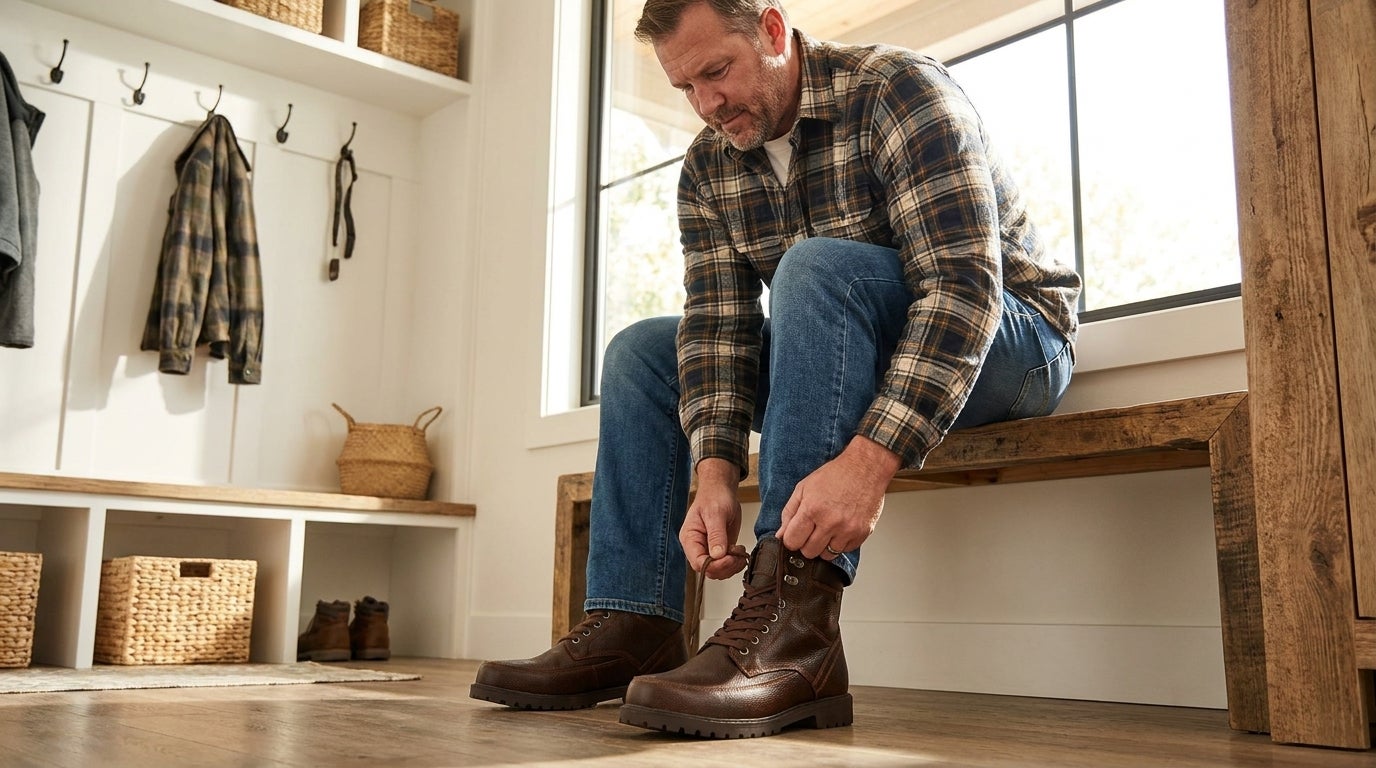
What actually makes a boot fit a Big & Tall build
Shoe size only measures length. A Big & Tall fit also depends on your footbed width and shaft room, neither of which shows up in a standard shoe size chart. Check the boot's listed width option and its shaft circumference before you buy - those two numbers matter more than the size on the box.
Boots built on a single standard last will pinch across the forefoot or dig in at the ankle even when the length is correct. Brands that carry true wide and extra-wide lasts publish that width option separately from the size, so look for it on the product page before adding to cart.
Width options to check before you buy
Most men's boots come in three width categories. Match yours to your own foot measurement, not to what "feels standard."
- D (standard/medium): the default width on most boots - fine for an average forefoot.
- W (wide): roughly 3/16" more width per size than D - E is the starting point for most Big & Tall feet.
- EW (extra wide): EE is one of the wider shoe width production options, built for a fuller forefoot and higher instep.
KingSize's wide width boots are built on wide and extra-wide lasts from the start, not a standard last stretched to fit, for men's shoes sizes from 9 to 17.
Shaft circumference matters more than you think
The shaft is the part of the boot that wraps your ankle and lower calf. A shaft cut too narrow will cut into higher-volume calves even when the foot itself fits fine. Check the stated shaft circumference, or look for a back-zip or lace-to-toe design, which adds real adjustable room a standard pull-on shaft can't.
Work boots vs. casual boots: how fit needs differ
The right width matters in both categories, but the shaft and closure priorities shift depending on what the boot is for.
Whichever you need, look at KingSize.com to shop wide-width and extra-wide boots built to those specs from the start for Big & Tall men.
| Boot Type | Width to Look For | Shaft/Closure Priority |
|---|---|---|
| Work Boots | W or EW, toe box sized to width | Reinforced ankle support; lace-to-toe for a snug, adjustable fit |
| Casual Boots | W or EW, matched to your everyday shoe width | Back zip or side-gore panels for easy on/off with room to spare |
Frequently asked questions
Do Big & Tall boots run true to size?
Length generally runs true when you order your standard shoe size, but width does not - always check the listed width option (M, W, EW or EEW) separately from the size.
What is considered a wide width for men's boots?
W (wide) is the opening wide width boot option, adding roughly 3/16" per size over D (standard) Medium width. EW and EEW boots goes wider still for a fuller forefoot.
How do I measure my foot width at home?
Trace your foot on paper while standing, measure straight across the widest point of the forefoot, then compare that number to the brand's width chart before ordering.