








Wide Width Shoes for Men: How to Get the Sizing Right
Wide width shoes use a letter code for width — W or EW — next to your usual shoe size. Match both, and the fit holds.

Follow These Steps to Get Your Width Code Right
Measure your foot, match the letter code, keep your regular shoe size in mind, then shop the shoe category that carries your width.
- Measure the ball of your foot. Wrap a tape around the widest part, at the end of the day when feet are largest, standing with weight on both feet.
- Match that number to a width code. Codes run D/M (standard) through E/W (wide) to 4E/EW (extra wide) and 6E/WW (extra extra wide).
- Keep your length size where it is. Width code and shoe sizes are two separate numbers — changing one doesn't change the other.
- Shop the width-labeled category. KingSize offers a wide array of Extra Wide Shoes which are available in widths from M up to Extra Extra Wide.
What the Width Codes Actually Mean
Each width code is described on our product page, along with a size chart — a size 11 M and a size 11 EW are the same shoe length, but cut to different forefoot widths.
The New Balance® 608V5 sneaker is built across all four: M(D), W(E), EW(4E), and WW(6E) in the same style, so you can hold the same length and move up in width until the fit is right.
| Width Code | Also Labeled | Best For |
|---|---|---|
| D | M (Medium/Standard) | Feet that sit true to size in a regular shoe. |
| E | W (Wide) | Feet that feel snug across the ball in standard width. |
| 4E | EW (Extra Wide) | Feet that need noticeably more room through the forefoot. |
| 6E | WW / EEW (Extra Extra Wide) | The widest stock width KingSize carries — for feet a wide shoe still pinches. |
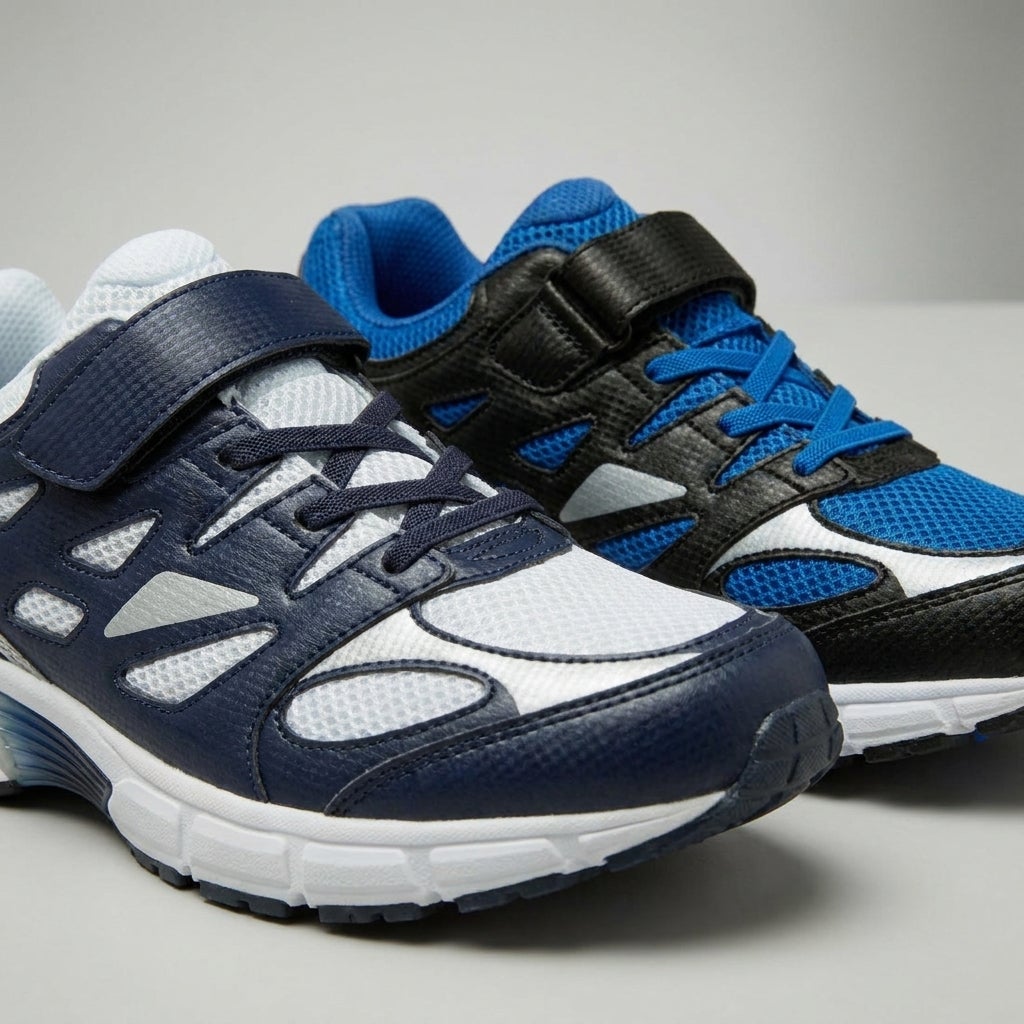
Sizing Up Doesn't Fix a Width Problem
Going up a shoe length size adds room at the toe, not across the forefoot — the heel and midfoot end up loose while the ball of the foot stays tight.
That's the gap a width code closes. A size 11 D/M that pinches becomes a size 11 W that doesn't — same length, more room where the foot actually needs it. Sizing up a length to compensate for width just trades one fit problem for another: now the shoe slips at the heel every stride.
Shop Wide and Extra Wide by Category
Sneakers, casual shoes, and extra wide styles are sized and labeled by width code on every product page, so our KingSize Shoe Width filter does the matching for you.
- Wide width sneakers for everyday wear and errands, including styles like the Skechers® Slip-Ins®: Summits, built in M and W widths with a hands-free entry.
- Wide width casual shoes for the office or weekend, sized the same way — length first, width code second.
- Extra wide shoes for feet that need EW or EEW across sneakers, casual, and dress styles in one place.
Frequently asked questions
What does EW mean in shoe sizing?
EW stands for extra wide. It's a width code added after your length size — for example, size 11 EW — that tells you the shoe is cut wider through the forefoot than a standard D or M width, without changing the length.
How do I know if I need wide or extra wide shoes?
Measure the widest part of your foot at the end of the day. If a standard-width shoe feels snug across the ball of your foot or pinches at the sides, start with wide (E/W); if that's still tight, move up to extra wide (4E/EW).
Are New Balance sneakers available in extra wide?
Yes. The New Balance 608V5 sold on KingSize comes in four widths — M(D), W(E), EW(4E), and WW(6E) — so you can match both your length and width code in one style.