








Big & Tall Robe Buying Guide
A Big & Tall robe needs extra length and a wider front wrap so it closes comfortably and stays closed all day.
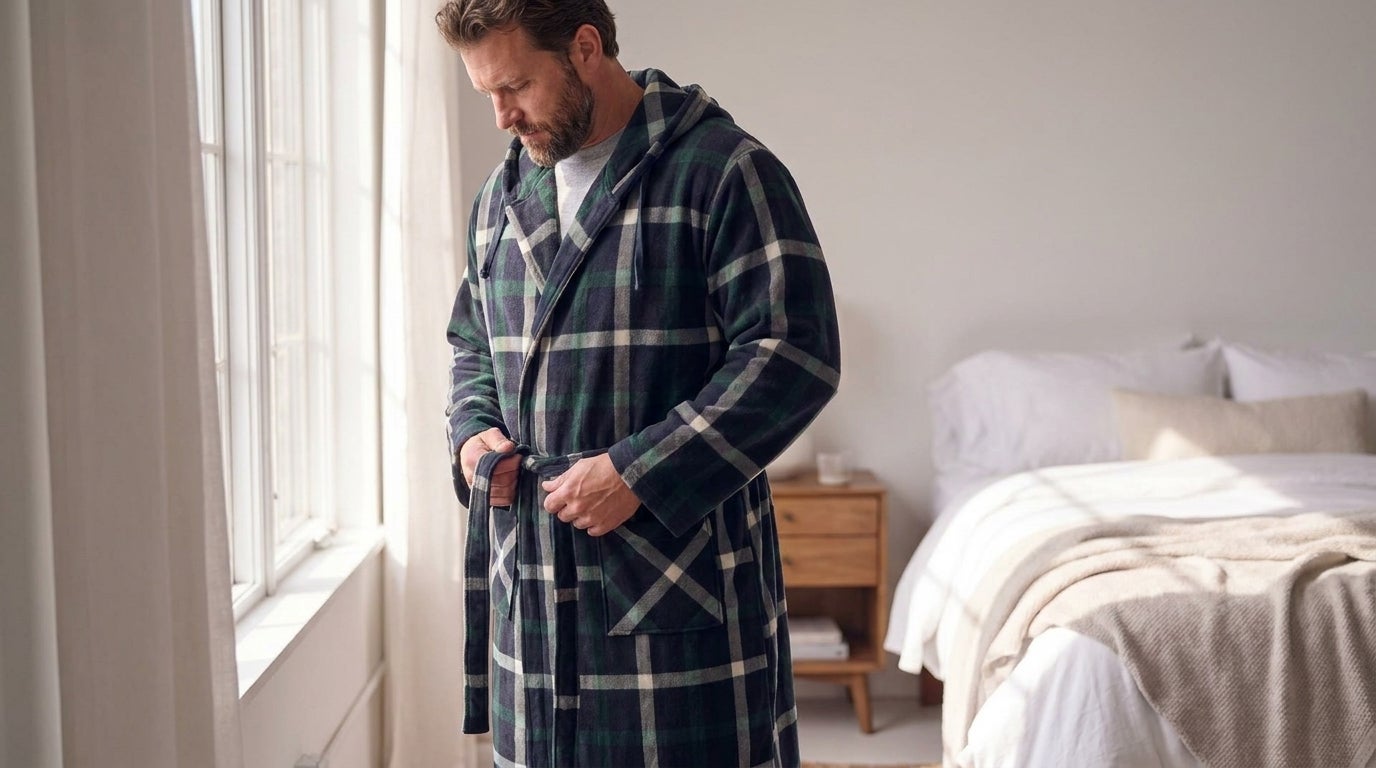
What makes a robe fit right on a Big & Tall frame?
A Big & Tall robe fits right when two measurements are built in from the start: enough length to cover past the knee and enough front-panel width to wrap and stay closed. Standard robes cut for average frames come up short in both places, so the fix is a robe pattern built for the size, not a longer version of a smaller one.
Robe length: why it matters more on a Big & Tall frame
Length is the first thing that goes wrong on a robe that wasn't built for a taller or bigger body. A robe that's too short rides up when you sit down and stops covering where it should. Look for tall-specific lengths, not just a bigger width, if your height is above average — a robe sized up in girth alone still won't cover the way it needs to.
The front wrap: getting overlap that stays closed
The front wrap is the panel width where the two sides of the robe cross over your chest and stay shut. On a Big & Tall frame, a narrow wrap pulls open at the chest or knee the moment you move. A properly built Big & Tall robe adds width to both front panels — not just the belt — so the overlap holds under normal movement, not just when you're standing still.
- Check the overlap at the chest, not just the waist — that's where a narrow wrap opens first.
- A self-tie belt with reinforced loops holds better than a thin sash under real weight.
- Deep patch pockets should sit flat, not pull the front panels apart when you use them.
Robe fabric weights compared
Robe fabric weight decides whether it works as a year-round layer or a cold-morning-only piece. Heavier fleece and terry hold warmth longer; lighter waffle-knit and jersey breathe better and pack smaller for travel.
| Fabric | Weight | Best For |
|---|---|---|
| Plush Fleece | Heavy | Cold mornings, all-day house wear |
| Cotton Terry | Mid | Post-shower, humid climates |
| Waffle Knit | Light | Warm-weather layering, travel |
| Flannel | Mid | Everyday comfort, cool evenings |

Building a full loungewear set
A robe works best paired with loungewear built on the same idea: extra room where a Big & Tall body actually needs it. Pair your robe with KingSize flannel plaid pajama pants which offer the same brushed-cotton warmth as a flannel robe for cold mornings, while our lightweight jersey pajama pants pair better with a waffle-knit or terry robe when the goal is breathable, warm-weather comfort. Start with the robe, then match the pajama fabric weight to it rather than the other way around.
Sizing tips before you buy
- Measure chest and height, not just your regular shirt size — robe sizing runs on both.
- Check the stated robe's Big & Tall length for your height range before ordering.
- Confirm the belt and interior ties are long enough to close fully at your size.
- Favor a robe rated for your Big & Tall needs rather than the top end of a standard-sized robe. You'll be assured that the fit will be perfect, every time.
Caring for your robe
Machine wash a fleece or terry robe on a warm, gentle cycle and skip fabric softener, which flattens the pile and cuts absorbency. Tumble dry on low and remove promptly to avoid the belt loops setting in a crease. A robe built with reinforced seams holds up to repeat washing better than a lightweight one, which matters most for daily use.
Ready to find the fit? Shop KingSize Robes built for Big & Tall sizing, up to 10XL.
Frequently asked questions
How much extra length should a Big & Tall robe have?
Enough to cover past the knee while standing and sitting. If a robe rides up above the knee when you sit down, it's cut short for your height and will keep doing it.
What's the best robe fabric for year-round wear?
Cotton terry or a mid-weight flannel works in most climates. Save plush fleece for the coldest months and waffle knit for warm weather or travel.
Should a robe fit loose or snug through the body?
Loose. A robe should wrap and close without pulling at the shoulders or chest — snug defeats the point of a layer meant to move with you.